Healthy Fats and Your Metabolism

I have recommended fatty acid supplementation for bodybuildersfor years, long before it becameso popular. The details of fatty acidmetabolism are quite complicated - farmore complex than protein or carbo-hydrate metabolism - but the basicconcept is simple. Everybody knowsthat vitamins and minerals are nutri-ents

Primrose

Primrose

required by the body in small quan-tities. (thus the name “Micronutri-ents”) which provide for vital meta-bolic functions. Certain fats are simi-larly required by the body in relativelysmall quantities. Since the body can-not manufacture these fats by itself, itis essential that they be obtained fromthe diet, and are therefore called es-sential fatty acids (EFAs). The mainfunction of EFAs in the body is to pro-vide building blocks for a class of hor-mones called eicosanoids.

The broadcategory of eicosanoids is further sub-divided into prostaglandins,prostacyclins, leukotrienes, and throm-boxanes. The eicosanoids are a com-plex group of hormones (over 100 dif-ferent prostaglandins have been iden-tified so far) which are involved in con-trolling many metabolic processes suchas blood pressure, inflammation, fatmetabolism, and blood clotting, to namea few. Eicosanoids are made by allcells of the body and their centralfunction is to communicate messagesto nearby cells to help coordinate andregulate the body’s metabolic activity.EFAs are also important structural components of cell membranes andthus are important for healthy skin. Butbefore we get too deep into the de-tails, let’s talk about the basics.Since everybody makes such a bigdeal about making sure to get enoughvitamins and minerals, why don’t wehear more about EFAs?

Aren’t theyjust as important? Essential fatty ac-ids are very important but they don’tget much attention because EFA deficiencies are relatively rare in America.Why? Because the average Americangets about 40% of his calories fromfat, which is more than enough to sup-ply adequate amounts of EFAs. Aboutthe only people you hear of sufferingfrom EFA deficiency are burn ortrauma patients, patients who have hadsome sort of intestinal bypass surgeryor intestinal resection, people with afat malabsorption syndrome (that is,they can’t absorb dietary fat verywell), malnourished children, patientsreceiving prolonged fat-free intrave-nous feeding, and during high-protein,low-fat dietary supplementation totreat kwashiorkor (protein deficiency)(1,2). Wait a second - what was thatabout high-protein, low-fat supplemen-tation? Does that sound like your diet?Normally people don’t have to worryabout EFA deficiency in this countrybecause the typical diet contains somuch fat.

Furthermore, EFAs can bestored in body fat so a dietary deficiency won’t show up for a long time.Extremely lean athletes, however, whofollow a low-fat diet for a prolongedtime are definitely at increased risk forfatty acid deficiency. Have I ever ac-tually seen any bodybuilders with theclinical symptoms of essential fattyacid deficiency? You bet. Did theirsymptoms resolve after fatty acidsupplementation? Yes - rapidly anddramatically. I remember one femalebodybuilder in particular who had aproblem with her skin getting dry andbreaking out, and it got worse at con-test time. After one week of EveningPrimrose Oil (EPO) supplementationher skin was completely clear. It was very dramatic, and you canimagine how happy she was.So what are the symptoms of EFAdeficiency? In adults the first symp-tom is dermatitis - red, dry, scaly skin,especially on the face (1-3). This con-dition will not be relieved by lotions ormoisturizers – you’ll simply have red,scaly skin with lotion on it. The EFAsare required for the formation of somecomponents of normal, healthy skin,so moisturizers really won’t help.Other problems include increased lossof water (from the skin), infertility, kid-ney disease, liver disease (includingdecreased ATP production), decreasedcapillary resistance, increased fragil-ity of red blood cells (which can re-sult in anemia), increased susceptibil-ity to infections, and decreased con-tractile strength of the heart (1,2). Ininfants EFA deficiency is even moreserious and can include decreasedgrowth, dermatitis, and degenerativechanges in the kidney, liver, and lung(1,2).

Recent evidence suggests thatEFAs are also required for normaldevelopment of the nervous system.Usually the problem doesn’t get thatfar. If you have any skin problems ora poor complexion you may want toconsider trying EFA supplementation.Lately there has been some specula-tion that EFA supplementation mayimprove muscle and strength gainsduring weight training, or decreasemuscle loss during catabolic conditions.In my opinion the jury is still out onthis issue; there’s just not enough in-formation to know for sure yet. How-ever, it would not surprise me at all ifit turns out to be true. I personallyhaven’t seen any dramatic changes inmuscle mass or strength following EFAsupplementation. I think themain nutritional issues here arecalories and protein intake.So what are the EFAs and what aresome good food sources for EFAs?Most dietary fat, as well as most fatstored in the body, is in the form oftriglycerides, also known astriacylglycerols.

These large moleculesare comprised of three fatty acidslinked to a glycerol backbone. Fattyacids themselves are long hydrocar-bon chains (the fatty part of the mol-ecule) with a carboxylic acid groupattached at one end (the acid part).Fatty acids are classified according totheir length and their degree of satu-ration. Short chain fatty acids are 2-4carbon atoms in length, medium chainfatty acids (like CapTri®) are 6-12 car-bon atoms in length, and long chainfats are 14-24 carbons long. The restof this article deals with the effects oflong chain fatty acids. The degree ofsaturation describes how many doublebonds the molecule has. If the fattyacid molecule contains no doublebonds, it is said to be “saturated.” Thisterm describes the idea that the car-bon atoms are saturated with hydro-gen atoms; if a fatty acid moleculecontains carbon-carbon double bondsit must give up some of the hydrogens,and is no longer “saturated.” Anyway,fats can be either saturated,monounsaturated, or polyunsaturated.Saturated fats are found in animal fatand some vegetable sources, and are the kind most prone to be convertedto cholesterol and clog up your arter-ies. There is no requirement for satu-rated fats in the diet and it’s best tolimit these as much as possible. As youcan tell from the name,monounsaturated fats contain onedouble bond. These fats are not es-sential in the diet, but do not contrib-ute to heart disease.

The best sourceof monounsaturated fat is olive oil.Have you ever wondered why theMediterranean diet does not causeheart disease even though it containsas much fat as the American diet? Thefat in the Mediterranean diet is sup-plied as olive oil, which does not pro-mote heart disease. The American dietis much higher in saturated fat (frommeat, butter, and eggs). Keep in mindthat while olive oil doesn’t causeatherosclerosis, it will still make youjust as fat as eating animal fat.There are two essential fatty acids,and both are polyunsaturated. Thismeans they contain multiple doublebonds. One is called linoleic acid (anomega-6 fatty acid) and the other islinolenic acid (an omega-3 fatty acid).The terms omega-6 and omega-3 de-scribe the location of the first doublebond from the methyl end of the mol-ecule. Many vegetable oils contain li-noleic acid (omega-6), including saf-flower oil, corn oil, soybean oil, andflax (linseed) oil, among others. Theomega-3 fatty acids are abundant infish oils; flax is the only vegetablesource containing a significant amountof omega-3. You can find these oils(except fish oil) in the grocery store,but if you’re going to take them as asource of essential fatty acids youshould be sure to use “cold pressed”oils. This means the oil was extractedwithout the application of heat, whichcan damage (oxidize, to be specific)the oil. The oils you see at the grocerystore are extracted by pressing withheat which increases the extractionefficiency, but damages the EFAs.

Also, if you’re using one of these oilsas a source of EFAs don’t cook withit - this also can oxidize the oil anddestroy its biological activity. Just usethe oil straight, or you can makesalad dressing out of it. You canfind cold pressed oils at goodhealth food stores. Most bodybuilderseat fish regularly, and fish are agreat source of omega-3s. If you don’tlike fish, omega-3 capsules areavailable at health food stores.When you buy EFA supplements don’tshop for bargains, shop for thebest. EFAs are delicate moleculesand are easily damaged duringpreparation. There is a difference inquality and purity between brands.There’s nothing wrong with using thecold-pressed oils mentioned above asa source of EFAs, but it’s not the ulti-mate way to go. I’ll explain why. First,these vegetable oils are not pure EFAs,but merely contain EFAs along with abunch of other fat (and calories) youdon’t necessarily want (from Linder,reference 3). The best source ofomega 6 is safflower oil, which is 74%linoleic acid. The others are around50% or less. the second problem isthat EFAs are not the final biologicallyactive compound (such aseicosanoids) but are merely the build-ing blocks the body uses to make thesehormones.

To form eicosanoids fromlinoleic acid, the first thing that hap-pens is the linoleic acid is convertedto gamma-linolenic acid (GLA). This conversion is carried out by an enzymecalled delta-6-desaturase. No problem,except for the fact that your bodymakes less and less of delta-6-desaturase as you age. The activityof this enzyme declines markedly,making this conversion inefficient.This is why I recommend EveningPrimrose Oil (EPO) as a better sourceof EFAs. The evening primrose is asmall flowering plant that grows inEngland. Evening Primrose Oil con-tains GLA and therefore bypasses thedelta-6-desaturase step. This turns outto be a way to provide EFAs in a mini-mal amount of fat calories, so it doesn’tupset your pre-contest diet strategy.So EPO is a more potent source ofEFAs than even safflower oil for tworeasons: it’s more concentrated intotal omega-6, which means there’sless “garbage” fat, plus itbypasses the limiting delta-6-desaturase step by supplying GLA di-rectly. Each 1000 mg EPO capsuleprovides 100 mg GLA and 760 mg li-noleic acid, so it is almost pure EFAs.

How do I take EPO? Take from twoto six capsules a day with meals. Whatdo I look for? You may notice an im-provement in the appearance of yourskin, especially if you were deficientin linoleic acid or if your level of delta-6-desaturase is low. It’s kind of liketaking vitamins. A vitamin deficiencyproduces a characteristic disease statewhich is reversed when the deficiencyis corrected. However, if you alreadyhave adequate vitamin levels then tak-ing extra doesn’t really make any dif-ference. (The exception may be theanti-oxidants, vitamin C, beta-caro-tene, and vitamin E, where there issome evidence that taking more thanthe minimum amount required to pre-vent a deficiency state may actuallyconfer additional benefits.) If you areborderline deficient in EFAs and haveHEALTHY FATS AND YOUR METABOLISMsome minor skin problems, then tak-ing EPO will probably help. If you con-sistently follow a low fat diet (10% ofcalories from fat or less), if you arevery lean, or if you have minor skinproblems EPO is definitely worth a try.At the very least it will ensure youdon’t develop an omega-6 deficiencywhile following a very low fat diet.The people who claim that EFAs maybe the “missing link” you’re lookingfor to pack on more muscle are prob-ably exaggerating in most cases. Myphilosophy is that the role of supple-ments is to increase cellular nutrientlevels beyond what can be obtainedfrom a healthy diet of regular foods.Food will always be the cornerstoneof sound nutrition – don’t lose sight ofthe importance of your diet.

The onlysupplements I know of that can reallyaffect your body composition beyondwhat can be obtained

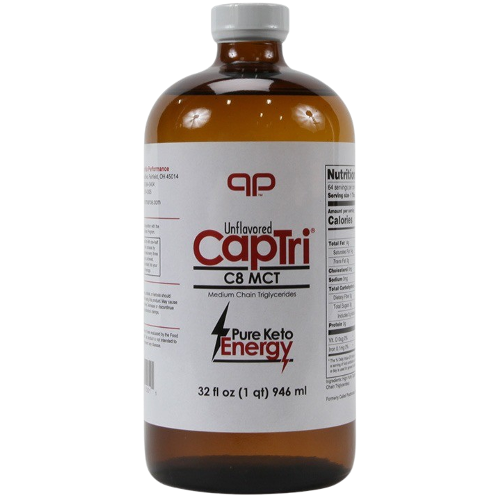
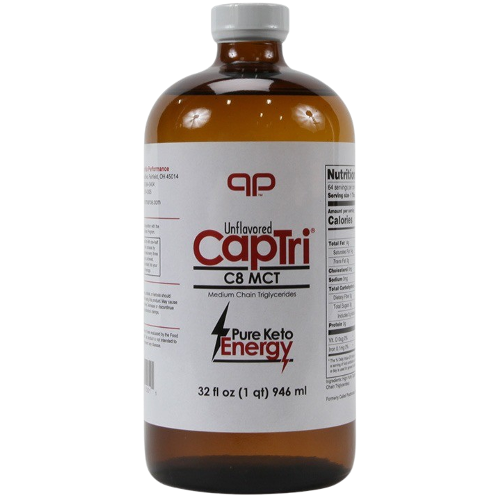
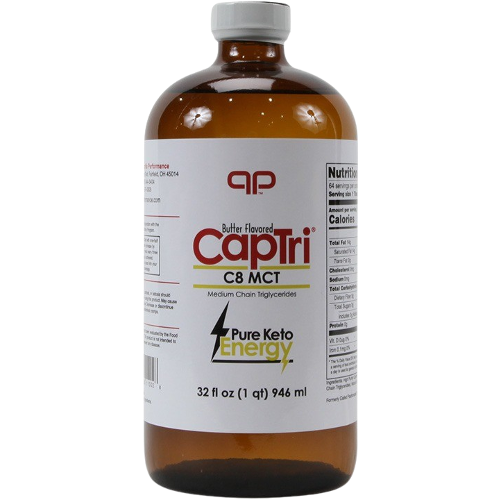
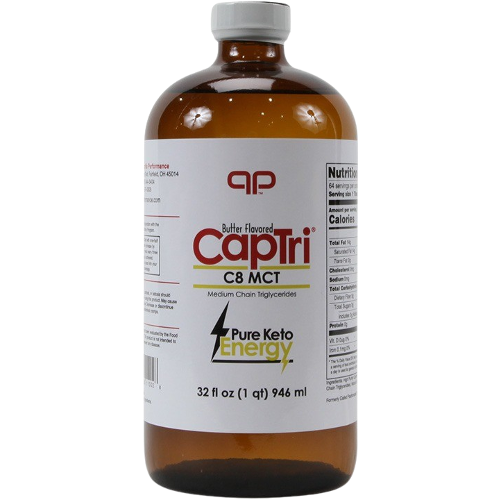
Parrillo CapTri

Parrillo CapTri

from regularfoods are CapTri® and Creatine.Are there any toxic effects from tak-ing too much EPO? No, EPO is com-pletely nontoxic. There are some po-tential side effects, which includeheadaches and (paradoxically) yourskin breaking out (pimples). These area result of the effects of the class 2prostaglandins which are made fromarachidonic acid, a metabolite of GLA.These effects are completely blockedby aspirin, which stops the conversionof arachidonic acid into prostaglandins.If you should notice these problems,simply take two aspirin and decreasethe number of capsules you take.That’s about all the practical “how to”information you need to incorporateEFAs into your diet. The Parrillo EPOsupplement was developed specificallyto provide a concentrated source ofEFAs so you don’t have to eat a table-spoon of oil every day.Parrillo EPO is a high-tech EFAsupplement designed to provideEFAs without excess non-essentialfats. It provides a way for bodybuild-ers and other athletes to optimizetheir EFA metabolism whilestill    maintaining a low fat diet.Parrillo EPO - another tool to helpyou optimize your nutrition.

References

1.Paige DM. Clinical Nutri-tion. C.V. Mosby Company,St. Louis, 1988.

2.Shils ME, Olson JA, andShike M. Modern Nutritionin Health and Disease. Lea& Febiger, Philadelphia,1994.

3.Linder MC. NutritionalBiochemistry and Metabo-lism with Clinical Applica-tions. Elsevier SciencePublishing Company, NewYork, 1991.

November 20th, 2008 by admin | No Comments »

Amino Acid Formulas > why you need them

 I have been an avid supporter ofamino acid supplementation forover twenty years. The reasonsare pretty

Parrillo BCAA's

Parrillo BCAA

straightforward and easyto understand; protein is the singlemost important nutrient for a body-builder seeking to add mass. Proteinconsumption is equally critical for thebodybuilder seeking to get shreddedand ripped prior to a competition asprotein has a “muscle sparing” effectand allows the athlete to hang ontomuscle mass even while reducingoverall caloric intake. Even if youdon’t consider yourself a bodybuilder,adequate protein consumption is criti-cal for obtaining any worthwhile fit-ness goals. At the most basic level weall want the same thing: add muscleand lose body fat. Without adequateprotein this is impossible. I will takemy protein advocacy one step furtherand point out that if you train reallyhard, hard enough to trigger musclegrowth and hard enough to burn offbody fat and don’t consume adequateamounts of protein, the body will teardown existing muscle tissue to feeditself. Brutally hard work, the kind Irecommend, requires a massive dailyinfusion of protein to preserve whatmuscle we’ve constructed. Protein isrequired for existing “muscle mainte-nance” and protein is needed to con-struct new muscle tissue. What ismuscle tissue, exactly?

Amino acidsare the building blocks of protein andorganic compounds that have both anamino (NH2) and carboxyl (COOH)radical in their molecular structure.Amino acids found in protein are di-vided into two groups, essential andnonessential.In order to construct new muscle 22amino acids are required. The bodycan construct twelve amino acids butthe other ten, the essential amino ac-ids, must be obtained from outsidesources. The amino acids the body isincapable of manufacturing, the es-sential amino acids, have to be obtainedfrom food or supplementation. Thehuman body cannot manufacturemuscle tissue unless all the requiredamino acids are present and accountedfor. If only some amino acids arepresent, the body cannot constructnew muscle and those amino acidspresent will be stored by the liver, degraded or used for energy. Manyamino acids are vitamin and mineraldependant and the protein synthesisprocess (building new muscle tissue)will be impaired if a particular vitaminor mineral is absent or not present insufficient amounts. For example themethionine amino cycle needs vitaminB-6 and magnesium. At Parrillo Per-formance we take all this into accountwhen we construct our supplementalamino acid formulations.

The questionbecomes – how much protein is opti-mal? Do athletes need more protein?The answer is yes; definitely, athletesneed significantly more protein thansedentary people do. Any controversyis over on this matter. Nowadays evenold school nutritionists agree. Do body-builders need more protein so theyhave more substrate to build newmuscle tissue? No – they need moreprotein because they excrete morenitrogen during exercise. Very littleadditional protein is needed to con-struct new muscle tissue but a lot ofextra protein is needed to make up forwhat is burned as fuel during exer-cise.What this means in practical terms ishard training, training that triggersgains, requires lots of protein each andevery day. Amino acids are the sub-components of protein and when thevarious amino acids are combined andgrouped strategically they promotemuscle gain and accelerate fat loss.

Different amino acids have differentphysiological effects. A serious body-builder or fitness devotee following theParrillo approach trains hard – other-wise they can’t be called serious. Ifyou train with weights as hard as in-tense and as often as I advise (5-6times a week for 60 to 90 minutes persession) and if you perform aerobicsas often and intense as I recommend,(up to an hour at a time first thing inthe morning) the demands on the bodyare dramatic and traumatic. Not trau-matic in an injurious way but in a de-manding and depleting way. You can-not train as hard and often as I sug-gest and not eat a lot of food. Calo-ries are king when it comes to musclerecovery and unless you consume tonsof calories the body cannot sustain theintense cardio and weight training re-quired to make serious gains. Theproblem is that if you eat sufficientcalories necessary to support the in-tense training required but obtain thecalories indiscriminately muscle gainswill marbled with body fat; you’ll endup adding body fat. A “clean calorie” contains no saturated fat or sugar. Aclean calorie cannot be derived froma refined manmade carbohydrate orfrom processed foods loaded with pre-servatives and chemicals. This makesit tough to obtain the right type of calo-ries and this is where nutritional supple-mentation is so valuable.Powerlifters lift huge weights and de-velop incredible muscle mass. Theyhave discovered that hard heavy train-ing combined with lots of caloriesequates to increased muscle mass.

However most powerlifters are indis-criminate about where they obtain theircalories and as a result, though they are massive and powerful, most carrylots of body fat. Their loose diet hab-its and indiscriminate calorie selectionprevents them from developing theripped, muscular physique bodybuild-ers seek. The solution is to consumelots of calories…calories derived fromlean protein (protein low in saturatedfat) and calories derived from naturalfibrous and starchy carbohydrates.Parrillo supplements are designed tohelp a serious bodybuilder consumeenough calories to grow mass withoutgetting fat. The Parrillo nutritional planis centered on eating multiple, bal-anced meals, five to six meals a day.Each meal is comprised of a portion of fiber, a portion of starch and a por-tion of protein. It is difficult to con-sume enough calories to support in-tense training solely from food and thisis where supplementation comes intothe picture. Every Parrillo supplementarose out of a need. CapTri® ’s uniquemolecular structure allows you to addclean calories (113-calories per table-spoon) that won’t end up as body fat.Pro Carb™ adds clean calories andprovides energy required for training.Optimized Whey™ and Hi-Protein™helps the athlete obtain the 1- 1.5 ormore grams of protein per pound ofbodyweight deemed optimal for some-one really doing it right in the gym. Idevised an entire line of amino acidformulations to enhance and amplifygains. Differing results can be obtainedby isolating and realigning amino ac-ids. Here is a handy reference guideto the complete arsenal of Parrilloamino acid formulations.

Muscle Amino Formula™: Wereyou aware that 35% of muscle tissueis made up of three amino acids: leu-cine, isoleucine and valine? Groupedtogether these amino acids are knownas the branch-chain amino acids.These three essebtial amino acids needbe present for muscle growth to oc-cur; if any of the three are absent, ex-isting muscle tissue will degrade andnew muscle tissue growth is impossible. Science has shown that consum-ing branch-chain amino acids after anintense workout accelerates musclehealing and recovery. I suggest takingtwo capsules with each meal and twoto three after an intense workout, op-timally with a 50-50 Plus™ shake.Take branched chain amion acids witha supplement drink or food as theyrequire insulin to work properly.

Ultimate Amino Formula™: No lessthan seventeen free-form amino ac-ids are gathered and combined to pro-vide an amino “shotgun” effect. WhenUltimate Amino formulation capsulesare taken with a meal, they are effi-ciently absorbed. Branch-chain aminoacids and the free-form amino profilecontained in Ultimate Amino Formularequire insulin for cellular absorptionand therefore need to be taken withfood. I suggest two capsules with each meal.

Max Endurance Formula™: Inosineis combined with feruic acid, DL-Phenylaianine and magnesium and po-tassium asparate to accelerate thedetoxification of waste products as-sociated with protein catabolism. MaxEndurance Formula™ improves oxy-gen retention during aerobic activity. Isuggest taking five capsules of MaxEndurance Formula™ thirty minutesprior to weight training or cardio.

Advanced Lipotropic Formula™:This grouping of inositol, L-methion-ine, L-Caritine, chromium, betanine,pancreatin, vitamin B-6 and B-12, bi-otin, and choline are essential in fatloss. The rationale is

Meral Ertunc

Meral Ertunc

simple: by con-suming one capsule with each meal,glucose tolerance is increased and thebody’s reaction to glucose is stabilized.These are the key ingredient your bodyuses to break down fat. Take one cap-sule with each meal.

Enhanced GH Formula™: Arginineand lysine have been shown to natu-rally elevate the body’s level of en-dogenous growth hormone particularlywhen consumed in the evening beforeretiring. Growth hormone is a power-ful muscle growth stimulator. I sug-gest 2-3 capsules on arising, beforetraining and before retiring.

Liver Amino Formula™: Heme ironis critical for combating iron-defi-ciency anemia and female athletes andbodybuilders are particularly suscep-tible to this energy draining condition.I recommend that bodybuilders con-sume 5-8 liver tablets with each mealand just before retiring for bed. Livertablets™ consumed before sleep dis-solves deep into the sleep cycle andforestalls catabolism. The Mac Daddypre-sleep supplement stack? Take 5-8 liver amino tablets along with 2-4Advanced GH™ capsules and washthem down with a Parrillo Hi-Proteinshake™ – caseinate protein powderreleases slower than whey and is idealfor a slow release of its amino content.

Parrillo Performance
(800) 344-3404 

November 20th, 2008 by admin | No Comments »